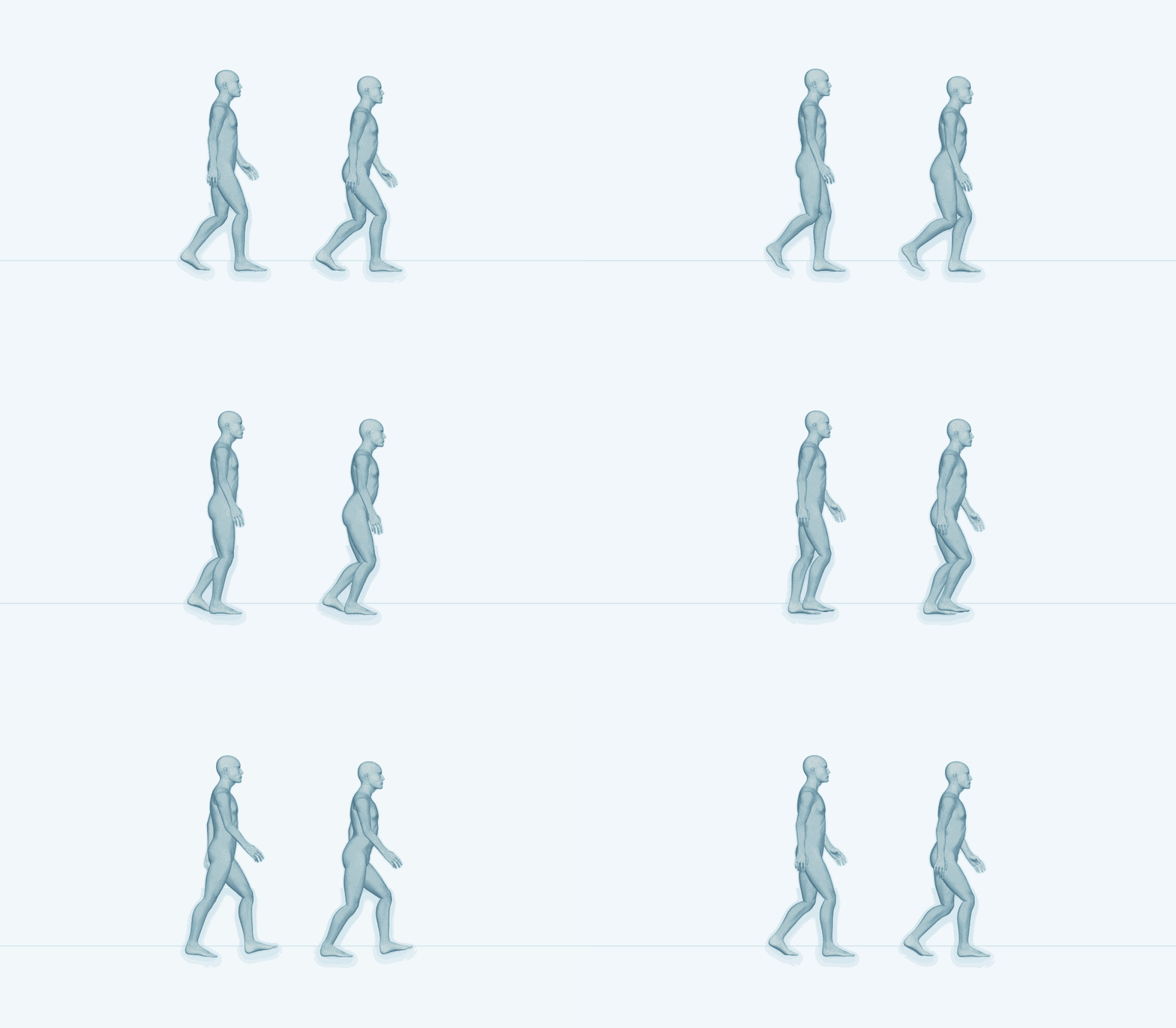
What if your back, knee or hip pain actually came from your big toe? FHL affects more than half of the population, yet remains underdiagnosed. Understand the biomechanical cascade that links your foot to your entire musculoskeletal system, built on more than twenty years of clinical research conducted at the Centre Orthopédique d’Ouchy.
Functional Hallux Limitus (FHL) is a condition that affects more than half of the population. It results from the inability of the long flexor tendon of the big toe (or hallux) to glide freely behind the ankle (in the retro-talar tunnel). This dysfunction manifests as excessive tension, like a tightened cord under the arch of the foot.
Like the master piece of a mechanism, Functional Hallux Limitus influences the entire locomotor chain: from the foot to the lumbar region, through the hip and the knee.
Watch the video
When the big toe loses its natural mobility, the consequences extend far beyond the foot. Osteoarthritis can progressively set in at the metatarsophalangeal joint, while the ligament structures endure abnormal stresses. The medial collateral ligament and the joint capsule, subjected to repeated tension, can weaken or stretch.
This biomechanical cascade not only affects the local stability of the big toe, but also modifies plantar support and propulsion during walking. The resulting compensations place excessive demands on the joints above, creating fertile ground for chronic pain and postural imbalances. Understanding these mechanisms makes it possible to consider comprehensive, preventive care before the lesions become irreversible.
Each section gathers the scientific resources, 3D illustrations and clinical tests validated by the Centre Orthopédique d’Ouchy.
Mobility assessment, clinical signs, gait analysis and tests performed during the consultation.
Learn more →
The role of the long flexor tendon and the retro-talar tunnel, explained in 3D animation.
Learn more →
From balance to sports, understanding the cascade that affects the entire lower limb.
Learn more →
Why this condition is so common, and why it remains invisible on standard examinations.
Learn more →
Physiotherapy, core strengthening, foot core, osteopathy and custom foot orthoses.
Learn more →
Functional hallux limitus attracts strong interest in the medical community, particularly among foot surgeons. This topic is regularly featured in the programs of international congresses.